BIO/ 01

Biomedical AI
Precision Diagnostics & Clinical Intelligence
Deep learning for medical imaging, disease prediction, and clinical decision support — transforming healthcare with explainable, patient-safe AI.
Explore domain
We build AI that is biomedically grounded, cognitively informed, and humanly accountable — through interdisciplinary research that fuses neuroscience, data, and the humanities.
Our center pursues a deeply interdisciplinary agenda — fusing biomedicine, cognition, data, and the humanities to build AI that is scientifically rigorous and humanly meaningful.
Precision Diagnostics & Clinical Intelligence
Deep learning for medical imaging, disease prediction, and clinical decision support — transforming healthcare with explainable, patient-safe AI.
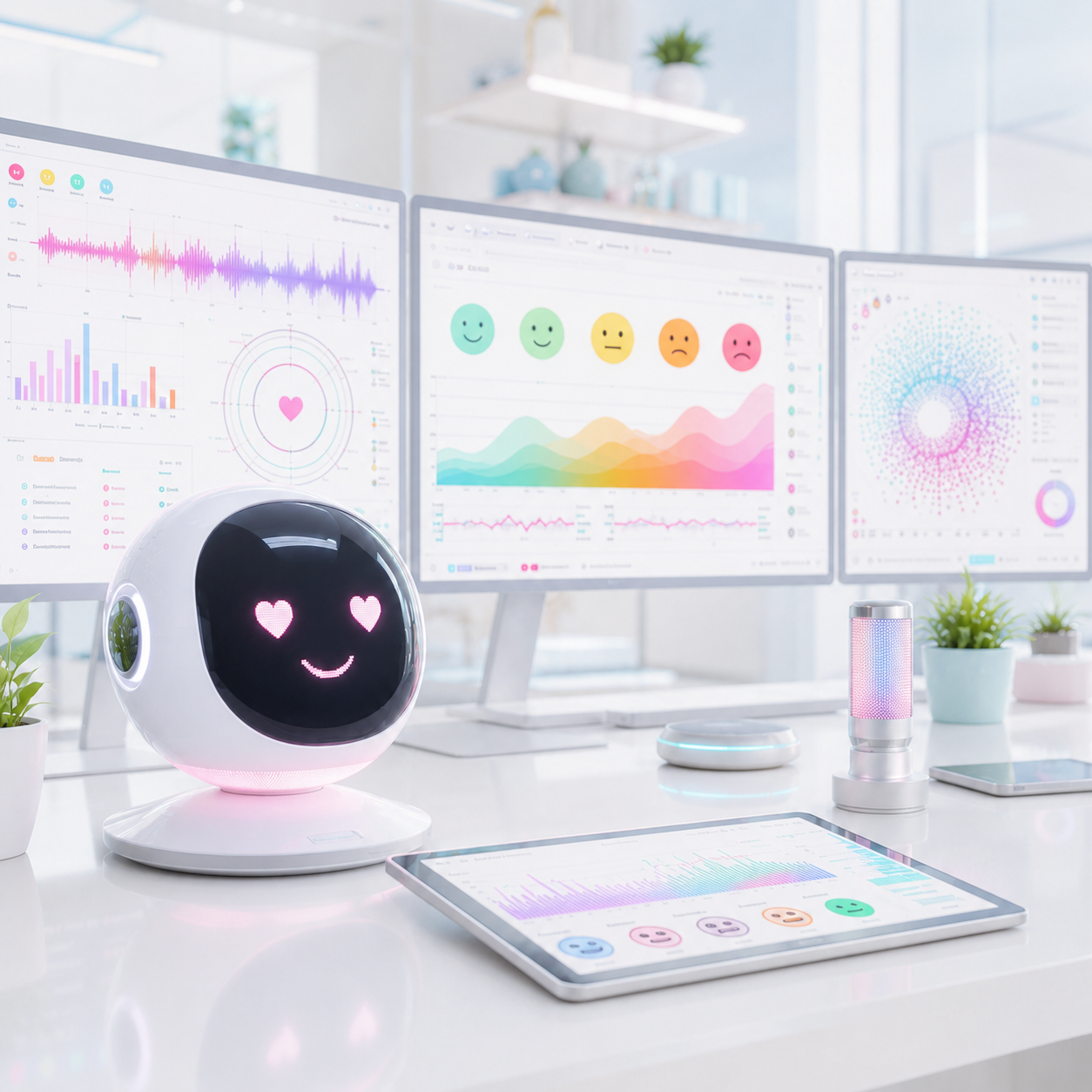
Affective Computing & Empathic Interfaces
Multimodal sentiment understanding across face, voice, and language — building machines that recognize and respond to human feelings.

Predictive Intelligence at Scale
Large-scale analytics and knowledge discovery on heterogeneous data — turning petabytes into actionable scientific and social insight.

Humanities · Philosophy · Ethics
Bridging artificial intelligence with the humanities — philosophical foundations, ethics, narrative reasoning, and the nature of intelligence itself.
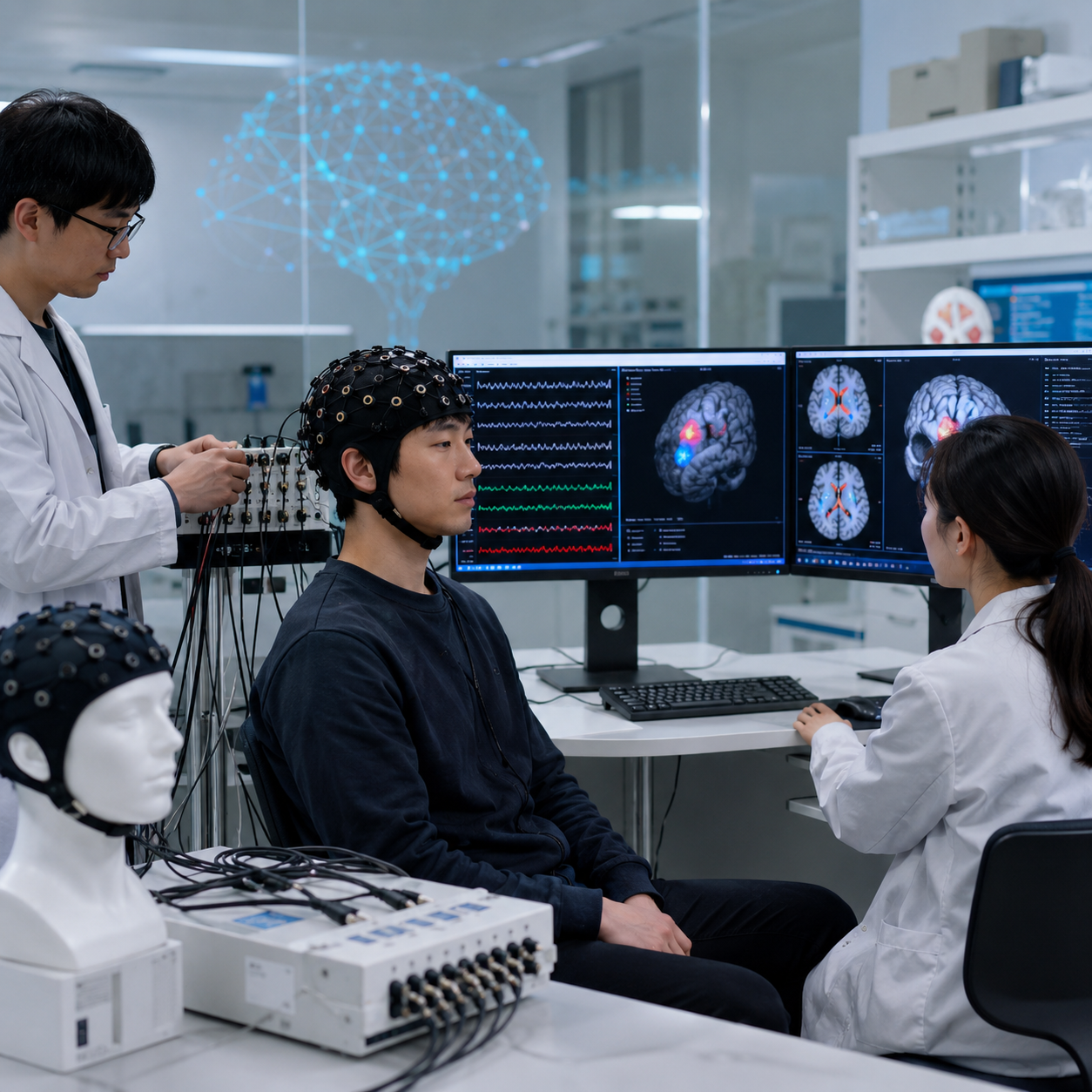
Brain-Inspired Computing & fNIRS
Decoding cognition through fNIRS, EEG, and neural signal modeling — engineering brain-aligned AI rooted in human perception and learning.

Responsible Design & Human-AI Teaming
Crafting AI systems that are accessible, transparent, and aligned with human values — from interaction design to algorithmic fairness.
A vertically integrated suite of research-grade AI tools — anchored by Kainos AI, our own foundation language model, and extending into grant writing, talent screening, literature discovery and peer review.
ORCID-Matched Daily Grant Alerts
Searches a professor’s ORCID record, learns their research signature, and delivers the most relevant funding calls to their inbox — every morning. From NRF and NIH to Horizon Europe, in a single curated email.
The Center’s Foundation Language Model
Keimyung’s own academic-grade large language model — fluent in Korean–English research discourse, grounded in peer-reviewed literature, and tuned for the citation discipline that science demands. The LLM service environment opens soon.
Researcher & Candidate Analysis
Multi-dimensional screening of academic and industry candidates — surfacing scholarly fit, collaboration patterns, and trajectory beyond the CV.
Research Proposal Authoring
Turns rough ideas into structured research proposals — methodology, prior art, and hypothesis chains drafted in your lab’s voice and citation style.
Literature Discovery & Citation Mapping
Navigates 200M+ papers to build living citation maps — exposing the conceptual neighbors, contrarians, and seminal anchors of any research question.
Peer Review & Manuscript Quality
Pre-submission diagnostic for manuscripts — surfaces statistical pitfalls, missing controls, and reviewer-style critiques before the journal does.
Our multidisciplinary team is working on breakthrough projects that push the boundaries of emotional AI understanding and application.
Advanced deep learning models for detecting and analyzing micro-expressions in real-time video streams with 97% accuracy.
Combining text, voice, and visual cues to create comprehensive emotion understanding systems for enhanced AI interactions.
Developing AI systems to predict emotional states in clinical settings to improve mental health diagnostics and patient care.
Understanding how emotions are expressed and perceived across different cultures to build more inclusive AI systems.
Experience our cutting-edge emotion detection technology through text, image, voice, and multi-person facial recognition — all running in real time.
Enter any text and see how our AI detects emotional content in real-time
0/5000 characters
Experience emotions in a 3D interactive environment with particle systems and real-time visualization of emotional states.
Explore emotional data plotted in a scientific 3D coordinate system with geometric boundaries and real-time interaction.
Geometric Visualization